Test: From Protein Images to CIF Structures
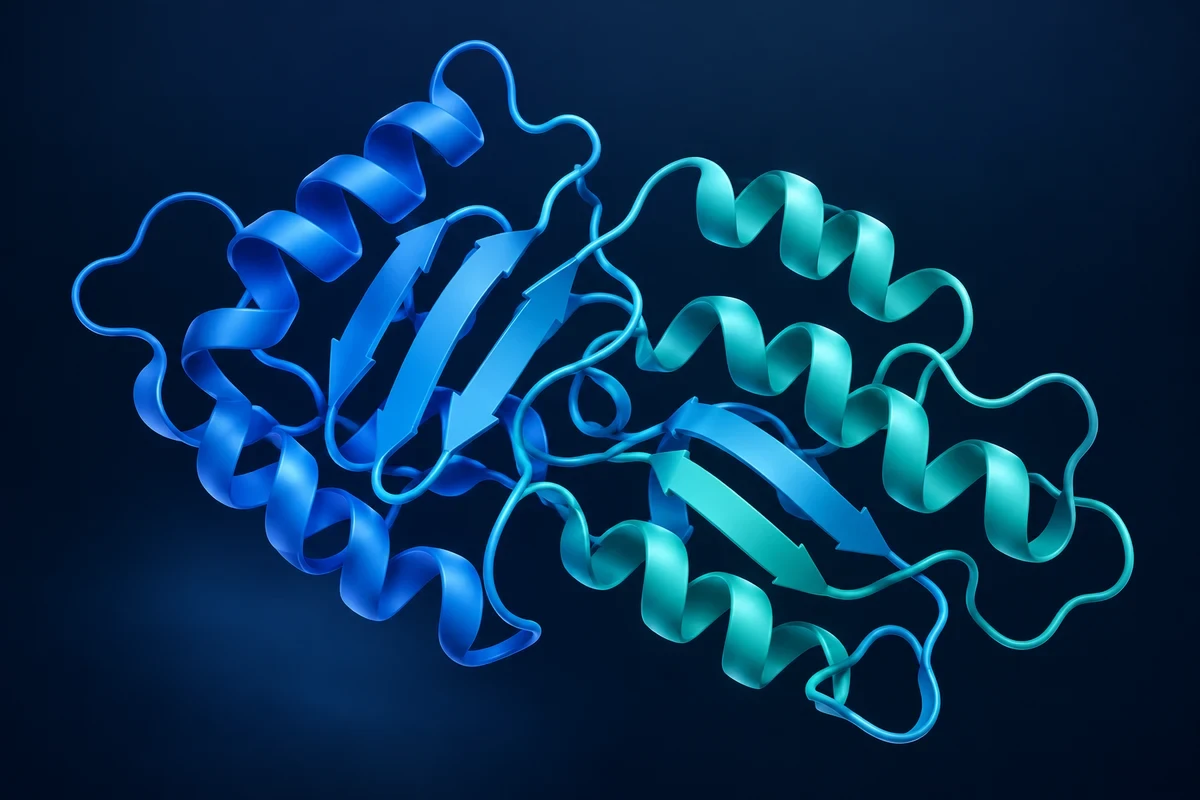
A short NextGenPeps test article pairing a generated WebP thumbnail, a workflow diagram and a downloadable crambin CIF reference structure.
Updated 2 min readBy NextGenPeps
On this page4 sections
A good molecular article connects a clear visual explanation with the underlying structure file. This short NextGenPeps draft tests that workflow using an illustrated cover, a diagram and an interactive 3D structure with a CIF download.
What is in the structure file?
The example is crambin, a small protein recorded as RCSB PDB entry 1CRN. Its deposited structure contains one protein chain, A, with 46 residues. The attached CIF preserves the sourced coordinates rather than generating a new predicted molecule.
From source to usable asset
From reference to structure file
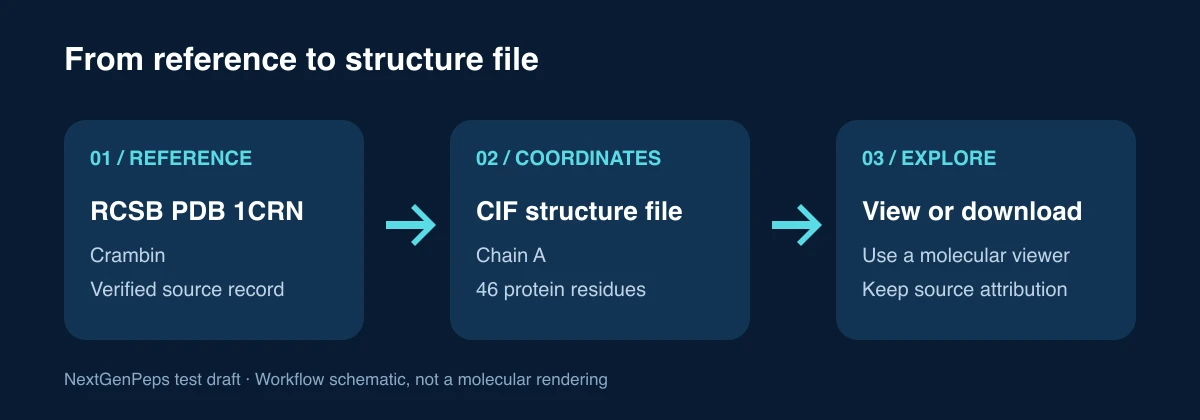
Workflow schematic created for this test article. It does not depict the protein's actual shape.
NextGenPeps diagram; structure reference RCSB PDB 1CRNImages are served as WebP for efficient delivery. The molecular data stays in CIF format so a compatible molecular viewer can interpret the coordinates. A decorative image and a coordinate file serve different purposes; the cover is an illustration, not experimental evidence.
Explore crambin in 3D
Use the built-in molecular viewer below to rotate the structure, switch between Ribbon and Sticks, or reset the view. The saved poster appears while the interactive model loads.
Download the registered crambin CIF or inspect the original RCSB PDB 1CRN record. The original coordinates remain available as a download for use in another molecular viewer.
Test checklist
Thumbnail and diagram load as WebP.
NextGenPeps is assigned as the author.
The CIF download opens successfully.
The draft stays unpublished and excluded from indexing.
The embedded 3D structure rotates and supports Ribbon and Sticks views.
This is a temporary editorial test, ready for review before publication.
Written by NextGenPeps
The NextGenPeps editorial team summarizes published peptide research for laboratory audiences. Articles are educational, cite their sources, and do not describe any product for human use.
More articles →Research Use Only: this article describes laboratory research. Nothing here is dosing guidance, and these materials are not intended for human use.